My last few blogs have been a bit of a downers. So, I think I’ll start 2025 with something lighter. As you probably know by now, I’m a sucker for TTRPGs, especially D&D. I’ve been playing these kinds of games since I was about 13, and I’ve literally never stopped. It’s one of my favorite hobbies, besides reading, playing video games, and so on.
Today, I want to share with you a list of ten words and terms that have entered my vocabulary from playing TTRPGs and D&D specifically. Let’s dive in.
1.) Load
While more modern versions of D&D use weight to indicate how much your character can carry, I originally learned this word in the context of why you can’t do a backflip or cast a spell while wearing full plate armor. This happened early in my gaming career when my wizard character tried wearing heavy armor only to find that he could barely maneuver while in it and couldn’t cast any spells. Needless to say, he immediately removed his heavy armor and resumed firing magic missile on almost any opponent as an opening move.

2.) computer/NPC
I count the two as one because they are closely related. If you don’t know him yet, we do computeror “Player Characters” and NPCsor “Non-Player Characters”. PCs are the characters people play as in TTRPGs, and NPCs are the other characters. These terms eventually migrated to video games. The central idea of the film Free People depends on the viewer knowing that Guy (played by Ryan Reynolds) is a digital character in an online video game. When I hear the phrase “Main Character Energy”, my mind always thinks “Oh, so it’s PC, got it.”
3.) Gamemaster/Dungeon Master
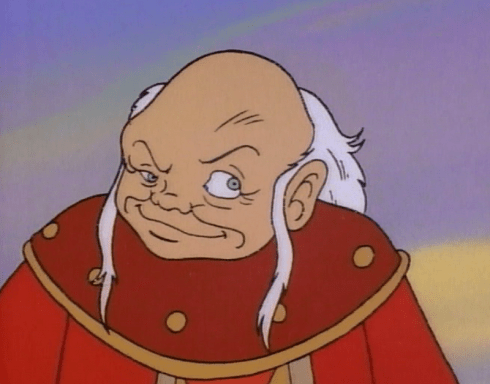
Tabletop roleplaying games have many names for these roles at the table: Gamemaster (or GM), Judge, Referee, Storyteller, and Dungeon Master. When I played D&D, I was already familiar with the Palladium and Rolemaster RPG systems, so I already knew someone who GMed and GMed games. Dungeon Master (or DM) is something I picked up from D&D because it’s a term specific to that game system (although I knew it from the cartoon first, not the game). Even today, I tend to use the more general term “GM,” even when referring to D&D. It may also have something to do with it being easier to explain to family members who are not familiar with TTRPGS that you are a gamemaster rather than a dungeon master.
4.) Game meta
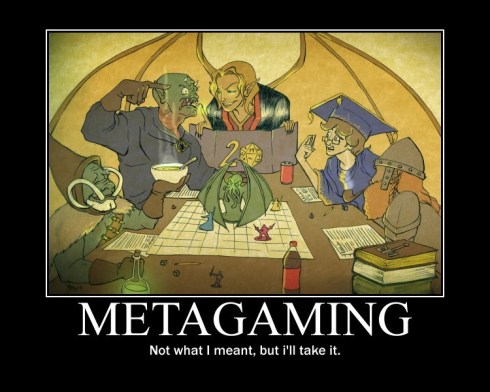
At first, this concept came to me as the difference between “player knowledge” and “character knowledge”. So, if you’re playing Grog, a level 2 barbarian, you (the player) may know how fast the speed of light is, but chances are Grog (the character) won’t have a clue about it. Thus, those who would use the player’s knowledge as a substitute for the character’s knowledge (i.e. Grog suddenly understanding advanced physics) are said to be metagaming. That’s something the GM/DM has to keep an eye on, but luckily the players I played with were very smart about this.
5.) Ward/Rune/Sigil
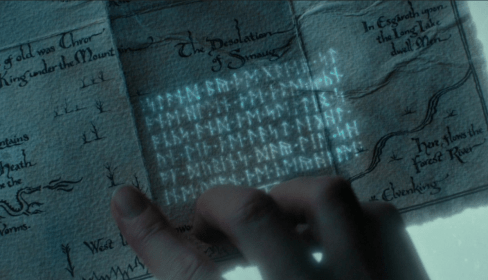
Again, I grouped these because of their similar nature. I knew runes before playing D&D from studying the real world runic alphabet. Through playing the game, I learned it as something inherently magical. So, a wizard or magic user might write or carve a symbol into something and then imbue that symbol with some kind of spell or magical effect. Sigils often work the same way, although I’ve always been under the impression that sigils are more Elven, while runes are more Dwarven (your fantasy mileage may vary). A ward, while not necessarily a symbol, is a magical protection that can be placed on an object or area to prevent intrusion, theft, or general deception. However, both are runes And sigils can act as wards. Magic!
6.) Dweomer
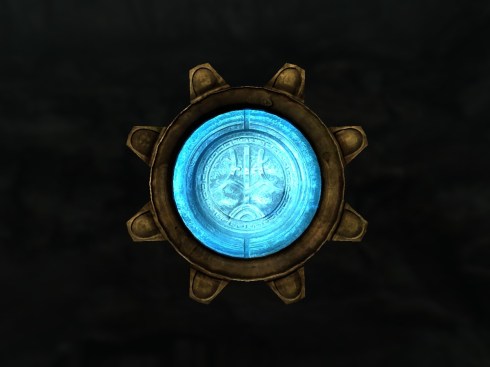
Often pronounced “dwimmer”, in gaming terms it is often used to describe the innate aura given off by a magical object or place. Although this word is no longer used very often, a more common expression is “charm.” Magic swords, magic forests, you get it — dweomers are some kind of ongoing or semi-permanent magical effect or property. I was also happy to find those Dwarves inside Elder Scrolls video game series (which are actually Elves) are called “Dwemer”, which is fitting considering their knowledge of magic is far more advanced than anyone else in that world.
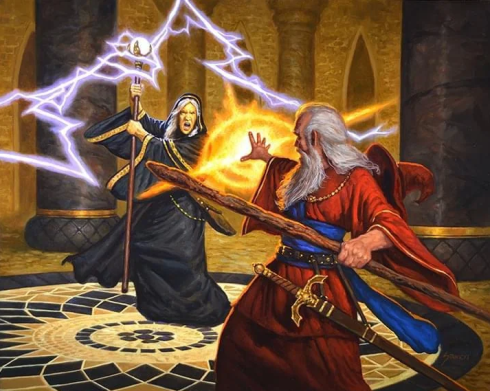
7.) Somatic
Spell descriptions in D&D generally have three types of components: vocalso the magic words spoken by the spell caster; materialor small items that a spellcaster must have (the proverbial newt’s eyes and frog’s legs), and finally somatic component. The latter represents the wavy passages that magic users make with their hands, the hand movements and complex movements they must go through to cast their spells. Until I read Player’s Handbook for the first time that day, I had never come across this term before.
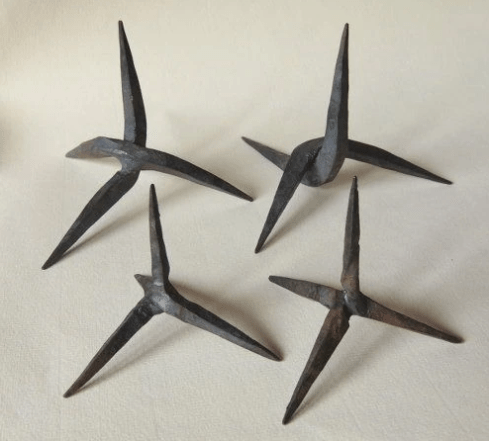
8.) Caltrops
Honestly, the first time I heard this term used, I thought the person was saying “cough medicine.” Now I know these are small pieces of sharp metal that you can throw on the ground. The design of caltrops is such that no matter which way they land, the tip remains sticking up. They are used to impede an opponent’s movement as the opponent must slow down to avoid stepping on them or running past them and risk facing the wrath of the so-called tactical Lego blocks.
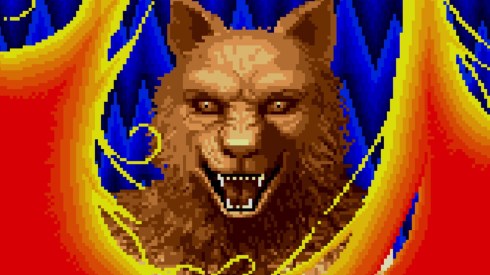
9.) Level Up
Sometimes it amazes me how far and wide this term is known and referred to. I saw a few days ago The Gap and Old Navy talking about enhancing your experience. Most likely, it is aimed at attracting gamers in particular videos gamers. But the terms I understand actually come from the tabletop world, and that’s where they first entered my personal gamer lexicon. There’s something cool about finishing a game session and knowing that your character has leveled up. Final Fantasy’s triumphant music almost always comes to mind when this happens.
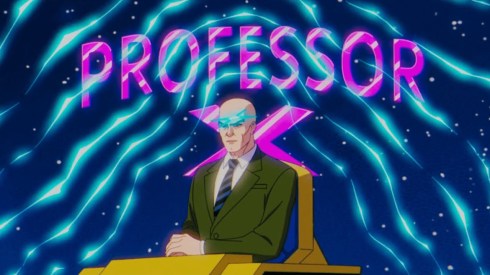
10.) Psionics
I first encountered this term in the Palladium fantasy RPG setting when I played “Mind Mage,” a user of psionics or mind magic. Later, when I was playing the Traveler RPG (which eventually led to my first novel), I discovered the Zhodani which was a community of psionicists. So, I guess this one doesn’t technically come from D&D as the title of this blog suggests, but D&D also has psionics which further cements the concept in…(wait for it)…my mind.
Honorable Mention
Playing TTRPGs has a way of refreshing your brain when it comes to certain things. I included this section because there are five specific words that have permanently changed in my vocabulary to the game version. When words No used in a gaming context, I had to get over my initial gaming reaction. You know, it’s like when a song parodied by Weird Al Yankovic comes on, but you keep singing Weird Al’s lyrics. NO? Only me?
- Initiative
- Campaign
- Critical
- Meet
- Module
Final Thoughts
I’ve always believed that playing TTRPGs trains many parts of your mind. I’m better at math, managing money, tactical and strategic thinking, acting and improvising, funny voices, and world building because I played this game. Besides, that Big for vocabulary. The words and terms I put forward here are just the tip of the proverbial iceberg.
If you’re a gamer of these games, you probably know exactly what I’m talking about. If you’re interested but have never tried it, I highly recommend you do. Adventures and worlds you can barely imagine are waiting for you out there.
Thanks for reading!
News
Berita
News Flash
Blog
Technology
Sports
Sport
Football
Tips
Finance
Berita Terkini
Berita Terbaru
Berita Kekinian
News
Berita Terkini
Olahraga
Pasang Internet Myrepublic
Jasa Import China
Jasa Import Door to Door
Originally posted 2025-10-14 10:14:15.