Paramount+ Streaming service releases latest Star Trek film, Section 31a few weeks ago to a very lackluster review. While Rotten Tomatoes is certainly not the ultimate, all in all barometer of how media is received, the film currently sits (at the time of this writing) at 17%, lower than even Star Trek: Nemesis And Star Trek V: The Final Frontier.
For more details, this blog post No About the movie, even though it has “Section 31” in the name. I haven’t seen the film, and likely won’t, for reasons that will become clear here shortly. Instead, I want to explore draft Part 31, why I think it undermines the underlying ideals of Star Trek, and why it matters perhaps more than we think.
I have the wonderful Jerry Goldsmith Star Trek: The Motion Picture score (where we first get the theme that will eventually become Next generation Theme) Playing in my headphones, so let’s do this.
What is Section 31?
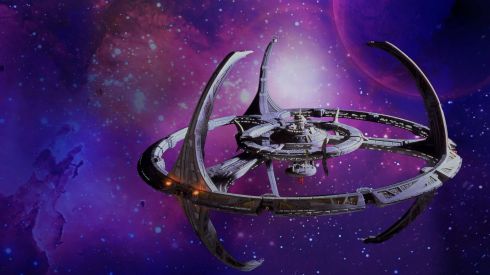
First, in case there was any doubt, let me say that I really love me some Star Trek: Deep Space Ninewhere the idea of Section 31 was originally founded. Some of the best Star Trek writing and acting Once stems from those seven seasons of television. Garak may be my favorite Star Trek character of all time, played by the incomparable Andrew Robinson. The slow breakdown of Avery Brooks’ writer persona in “Far Beyond the Stars” stands out as one of the best shows I’ve ever seen, Star Trek or otherwise.
DS9 ditches the episodic nature that TNG had in favor of long arcs that take place over multiple episodes, or even multiple seasons. It’s also not afraid to show the federation facing its own extinction at the hands of the Dominion, and the despair it evokes, as in the episode “The Pale Moonlight.” It doesn’t try to romanticize war. Quite the opposite. While it’s certainly a darker and more poignant Star Trek, even at its most harrowing, it’s not nihilistic. There is always hope, even if it is, as Gandalf calls it, a fool’s hope.
It is into this environment that we first encounter Section 31, the super-secret wing of the Federation Intelligence Service, first introduced in 6th Season episode, “Inquisition.” At the end of this episode, we learn that Section 31 has been around since the founding of the Federation.
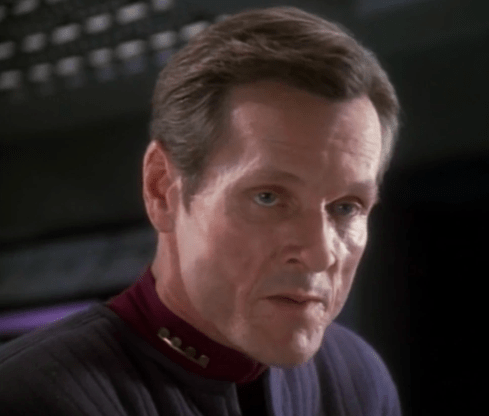
We then meet the face of Section 31, Luther Sloan (played by William Sadler), once again in “Inter Arma Enim Silent Leges,” where Section 31 operatives frame an innocent Romulan senator, who is a strong supporter of the Federation/Romulan cooperative effort, as a tester for the cause, possibly executed for his supposed empire.
Lastly, in an “extreme measure,” it is revealed that Section 31 has engineered a virus to kill the changelings in an attempt to eradicate the Dominion founders. Sloan dies in this episode, allowing the characters to stop this genocide before it starts, but it is implied that there are so many operations going on that section 31 has going on that no one has a clue about, and with her death, likely never will.
Damage Report
So, we have kidnappings, killings, murders, and out-and-out genocides. If that seems like things are far from over, even the characters in the show are shocked by Section 31’s actions. Odo even comments, “The federation claims the tactics hate section 31, but when they need the dirty work done, they look the other way. It’s a neat little setup, isn’t it? “
Even though there’s a line that says that Section 31 is not affiliated with Starfleet or the Federation, they were still part of the federation’s founding charter, so perhaps they’ve been around from the beginning doing some truly terrible things right behind the scenes.

This is framed by Sadler’s character as section 31 doing the dirty work so the people of the federation can sleep well at night, protecting the people of virtue from the external threat of those who do not share their high-minded ideals.
Effectively, that means humanity never really changes. Despite all the great speeches by Kirk and Picard about how humanity is capable of growing out of childhood in a post-class society and into something greater, something more noble than where we are now, it’s really just an illusion. All this time, Section 31 has been quietly clearing the way for the Federation to emerge as this enlightened society, but it never really happens. The utopian idea of federation is a lie.
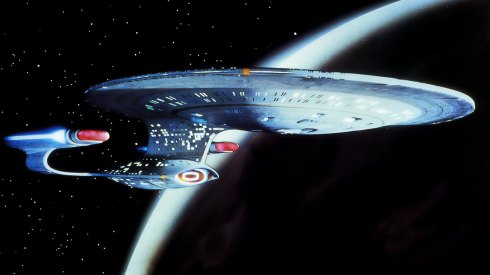
For my part, such disdain for the federation really takes the heart out of Star Trek. I think the idea of Section 31 actually does significant damage to intellectual property as a whole. The three episodes of DS9 really opened Pandora’s box.
Unfortunately, the Kurtzman era of Star Trek can’t seem to get enough of Part 31. The film was intended to be an entire series, but Michelle Yeoh won a much-deserved Oscar, so the project was limited in scope to one feature-length film. No shade on the actors or crew, but I hope so far and part 31 can be retired for now.
The Jason Bourne Effect
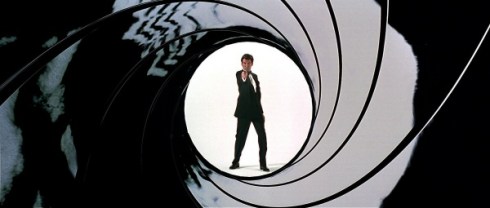
Allow me a brief sidebar on James Bond. So, when Daniel Craig took over the role of 007 Casino Royaleit’s clear that they’ve toned things down from Pierce Brosnan’s last entry Die another day. This bond has little in the way of spy gadgets or spoofing vehicles. While it’s not exactly humorless, it lacks the fun and excitement that comes from many of the other installments in the franchise. The overall tone and presentation of the story feels much more like a Jason Bourne film with a grittier, more grounded approach.

The problem is that Bond has a unique kind of formula, something we don’t really get anywhere else. Sure, Austin Powers, parodied that formula to the nth degree, but it was able to do so because the Bond formula was so successful and recognizable, having appealed to audiences for 40 years by the time of Craig’s run as the master spy. Timothy Dalton License to kill is someone who famously departed from that formula, and it shows. Bond is just on his way to revenge against a major drug cartel figure. Up until then, there had been a Bond film every two or three years since the original No in 1961. After License to killit was six years before Brosnan brought the tie back in 1995 Goldeneyethat looks back to a proven formula.
Jason Bourne was intended to stand in contrast to Bond, as something in the same genre but fundamentally different. If audiences wanted a harder look at spy games, they already had that with the Jason Bourne films and other series like them. Bond, on the other hand, is a unique mix that we don’t get anywhere else. By making the tie-in more Bourne-like, we lose the uniqueness of the franchise. After that, it feels like any other series of spy films.
What does this have to do with Star Trek? Simple, we don’t get a lot of utopian science fiction. If you want dystopian sci-fi, you’re truly spoiled for choice. There are many out there. When you make Star Trek nihilistic and hypocritical, you lose what sets Star Trek apart and makes it such an enduring and iconic franchise.
Why it matters
OK, so if it’s just a TV show and a series of movies, why does any of it matter? Who cares besides a bunch of fanboys? Well, think about the many people over the years who have gone on to become doctors, scientists, engineers, or any number of other careers, who have made real contributions to these fields because Star Trek showed them a hopeful, even inspiring, vision of the future.
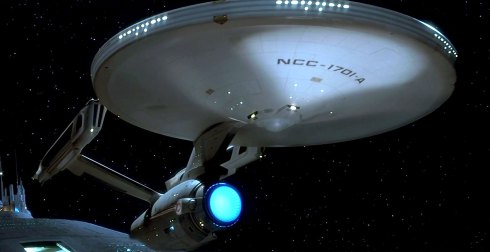
Look, I get it – we don’t see the future the same way anymore. When I was a child, there was still a sense of optimism for the future. Now, more often than not, the future is something we fear. It could be argued that a darker, less idealistic Star Trek is what appeals to modern audiences, especially younger generations who may not have much to look forward to as the issues that affect them most have been largely ignored or exacerbated.
My counter argument to that is that grim times are when we need inspirational fiction more than ever. Remember, TOS came out during the Cold War, when World War II still loomed large in the public consciousness, just three years after the imminent Cuban missile crisis, and during the height of the civil rights movement.
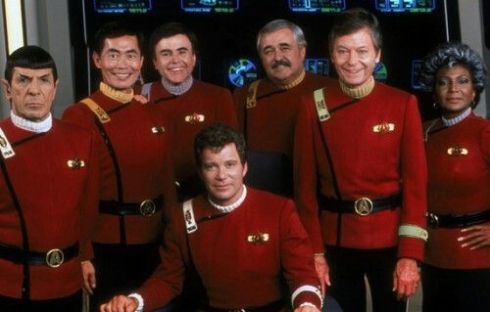
Kirk’s Company showing us that we can finally put all our differences aside and work in harmony. It is not a mistake that there was a Russian navigator and a Japanese helmsman. The late great Nichelle Nichols told the story of how she wanted to leave performing to pursue her stage career, but was talked out of it by Martin Luther King, Jr. I invite you to watch it if you haven’t seen it yet. It’s beautiful. In it, he mentioned that Dr. King would let his children stay past their bedtime to watch shows.
My parents did the same for me, who were both huge fans. TOS episodes in syndication would appear late at night, but I was allowed to stay up late to watch them. I have to contrast that with the fact that I wouldn’t allow my young son to actually see modern Star Trek at all, given the very frequent explicit or gratuitous depictions of torture and violence (the whole Icheb thing on Picard comes to mind), to say nothing of the lack of a clear moral message and the sad, despairing tone.

I know that may seem grandiose, even hubristic, to say, but I think the world needs something like Star Trek to show us that all hope is not lost, that things can be better – that We could be better. So, when I say that Section 31 scrapes all of that, and makes Star Trek as much a look at another Grimdark in the future, it has further reaching consequences than being a mere show.
Final thoughts
In Gene Roddenberry’s vision of Star Trek, we humans finally discover our humanity, and build a society based on the better angels of our nature. Star Trek: The Next Generation continue and maintain that vision. Star Trek: Deep Space Nine Did too, at first, but ultimately introduced a concept that, for me, completely went against everything up to that point. Because it’s not really touched Voyager or CompanyThe concept of Section 31 may remain contained in some episodes of DS9.
The current crop of Star Trek, however, has chosen to embrace part 31 at almost every turn, culminating with the eponymous film. However, I will give credit to Star Trek: Strange New Worlds To try to rekindle a bit of optimism I think is very important, but even that has struggled to be consistent on that count when Captain Pike is likely destined to be maimed in the accident he knows is in his future. Also, the episode “Lift Us Up Where Suffering Cannot Reach” was such an epic downer that it really put me off watching the show.
So, it is my sincere hope that Star Trek can properly and move away from part 31 focus moving forward and back to show us what our future will actually be like. want to to live, instead of becoming, perhaps unintentionally, a franchise deconstructionist. In essence, I’ve always believed that science fiction is one of the surest ways to inspire ourselves as humans, to give us something to reach for on the far horizon, and Star Trek is at the forefront of that frontier. It would be a shame to lose it.
Thank you for reading, I wish you all peace and long life.
News
Berita
News Flash
Blog
Technology
Sports
Sport
Football
Tips
Finance
Berita Terkini
Berita Terbaru
Berita Kekinian
News
Berita Terkini
Olahraga
Pasang Internet Myrepublic
Jasa Import China
Jasa Import Door to Door
Originally posted 2025-10-08 10:06:49.